Can you understand a Mexican TEENAGER?
This is real, unscripted Mexican Spanish... no actors, no slowed-down audio. Follow along, toggle English when you get lost, and tap the highlighted chunks to see what they actually mean.
“Man, this is so awesome! Hopefully, with this website, I’ll finally be able to listen to guys like Franco Escamilla or Carlos Ballarta without feverishly rummaging through the dictionary every 2 seconds.”
Get access to the whole interactive Voces de México library.
📄 Read the transcript▾
Full transcript
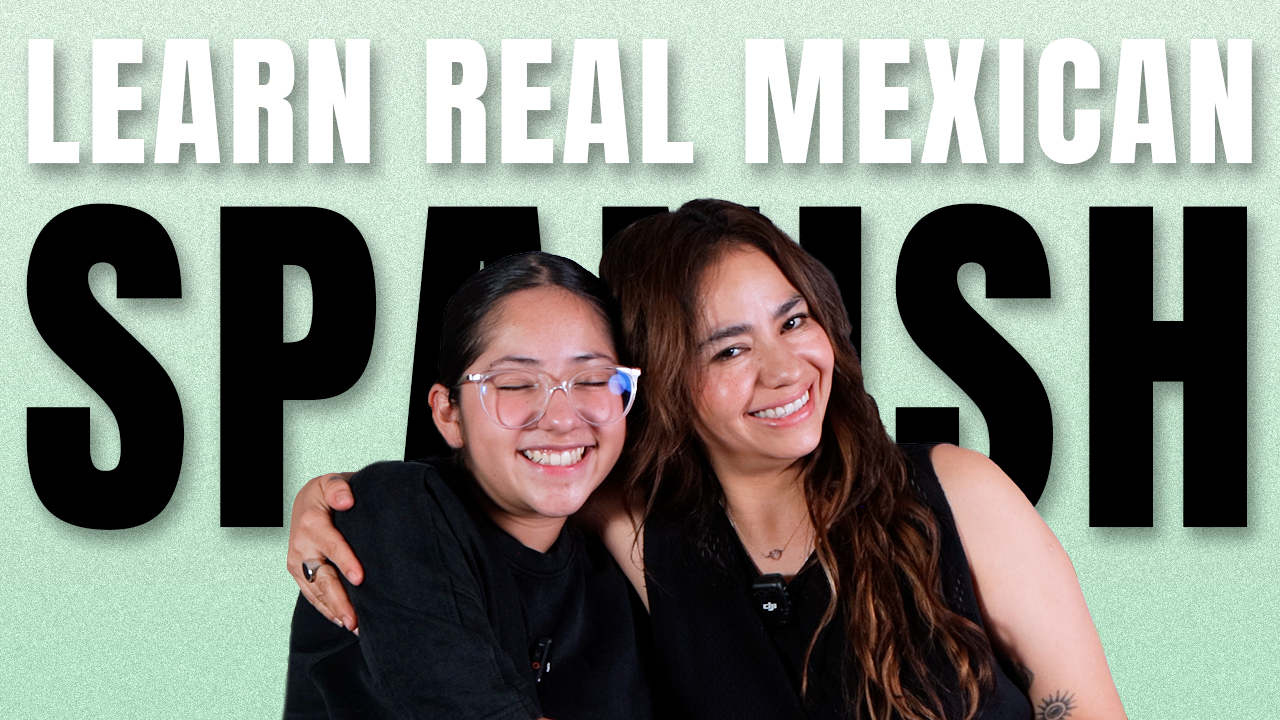
0:00Hola, estamos una vez más en un episodio de Pura Plática, con mi sobrinita, que es generación Z alfa.
Hi, we’re back once again with another episode of Pura Plática, with my niece, who’s Gen Z-alpha.
0:09Vamos a ver si le entienden.
Let’s see if you can understand her.
0:12Y se llama Isabela.
And her name is Isabela.
0:14Hola, Isabelita, ¿cómo estás?
Hi, Isabelita. How are you?
0:15Bien.
Good. And you? How are you?
0:16¿Y tú?
Good. And you? How are you?
0:16¿Cómo estás?
Good. And you? How are you?
0:17Muy bien, mi amor.
Very well, sweetheart. So, basically,
0:18Pues, básicamente, me encantaría platicar contigo acerca de cómo sientes la diferencia entre, por ejemplo, tu mamá y tú con respecto a las redes sociales,
Very well, sweetheart. So, basically, I’d love to chat with you about how you see the difference between, for example, you and your mum when it comes to social media,
0:32por ejemplo, o sea, o la tecnología en general, porque, pues, tú ya es algo con lo que naciste, ¿no?
for example, or technology in general, because, well, it’s something you were born with, right?
0:39Sí, sí, sí.
Yeah, totally.
0:39¿Y sientes, o sea, cuando estás platicando con tu mami, que hay una diferencia o no?
And do you think, like, when you’re chatting with your mum, that there’s a difference or not?
0:46Sí, sí hay una diferencia grande porque, a veces, no sé, se puso muy de moda hacer el 6-7, y a veces yo le hacía y no entendía.
Yeah, there’s definitely a big difference because sometimes, I dunno, the 6-7 became really popular, and sometimes I’d do it to her and she just didn’t understand. She’d be like, "Huh?"
0:56Y era como de: "¡Ay!"
and she just didn’t understand. She’d be like, "Huh?"
0:57Pues me estresaba yo porque...
Well, I’d get stressed because...
1:00No te entendía el 6-7.
she didn’t understand the 6-7.
1:02Explícanos qué es el 6-7.
Explain to us what the 6-7 is.
1:03Es como para decir que... o sea, es como que está interesante.
It’s a way of saying that... I mean, it’s like something’s cool. Like, 6-7.
1:09O sea, 6-7.
like something’s cool. Like, 6-7.
1:11Eso es.
That’s it.
1:11Ajá, sí, interesante... divertido.
Uh-huh, yeah, cool... fun.
1:16O sea, ¿y lo puedes emplear con todo?
So, can you use it for anything?
1:17Digo, perdón, pero yo soy ignorante.
I mean, sorry, but I’m literally clueless.
1:20Mmm... sí.
Mmm... yeah.
1:21O sea, ¿cómo me podrías, ahorita, a mí, eh, aplicar el 6-7?
So how could you use the 6-7 to describe me right now?
1:28Mmm... tu outfit está muy 6-7.
Mmm... your outfit is very 6-7.
1:31Está muy bonito.
It’s really nice.
1:33Ah, ok.
Ah, okay. Cool.
1:34Qué cool.
Ah, okay. Cool.
1:35O sea, yo te podría decir: "Eres muy 6-7".
So I could say to you: "You’re very 6-7."
1:38Muy divertida.
Really fun.
1:39Ok.
Okay.
1:41Ah, ya les entendí.
Ah, now I get what you guys mean.
1:43Y, por ejemplo, ¿qué sentirías tú que es una gran diferencia entre la generación de tu mamá, por ejemplo, o yo, con la tuya?
And, for example, what would you say is a big difference between your mum’s generation and mine, for example, and yours?
1:51Pues que, a veces, no nos entendemos.
Well, sometimes we don’t understand each other.
1:54O sea, que ocupamos diferentes formas de hablar y eso.
I mean, we use different ways of speaking and stuff.
1:58Como, por ejemplo, ¿cómo hablarías si fuera yo tu mejor amiga?
Like, for example, how would you talk if I were your best friend?
2:02¿Cómo me dirías?
What would you say to me?
2:04O sea, porque, por ejemplo, te voy a poner un ejemplo, ¿no?
I mean, because, for example, I’ll give you an example, ok?
2:06En mi generación era así de: "¿Qué onda, amiga?
In my generation, it was like: "Hey, amiga! How are you?"
2:09¿Cómo estás?"
"Hey, amiga! How are you?"
2:10Y ya era así como de: "Ay, qué onda", y ya sabías que era como: "Ay, hola.
And then it was kinda like: "Hey, what’s up?" and you knew it meant:
2:14¿Cómo estás?"
"Oh, hi. How are you?"
2:16No, pues aquí llegamos, nos abrazamos y empezamos a platicar.
No, we just arrive, hug each other and start chatting.
2:20O sea, no es como un saludo como tal.
I mean, we don't really have a greeting as such.
2:21Nada más nos abrazamos y empezamos a platicar.
We just hug each other and start chatting.
2:23O sea, ya no se dicen "hola".
So you don’t say "hola" anymore.
2:24Nada más se abrazan.
You just hug each other.
2:25Sí.
Yeah.
2:26Ok, bueno.
Okay. And what do you call her...?
2:27¿Y cómo le dirías, así...?
Okay. And what do you call her...?
2:29O sea, ¿cómo se tratan?
I mean, what are you like with each other?
2:31¿Tienen algún apodo?
Do you have nicknames for each other?
2:33Eh, sí.
Uh, yeah. I call her "Cachorrita".
2:36Le digo "Cachorrita".
Uh, yeah. I call her "Cachorrita".
2:37¿Cachorrita?
Cachorrita?
2:38Sí.
Yeah.
2:38O sea, de "Cachorrita", y te abrazo y ya.
Like, "Cachorrita", and I hug her, and that’s it.
2:40¿Y tú?
And you?
2:42Eh, a mí me dice "Chucky".
Uh, she calls me "Chucky".
2:44¿Por qué te dice "Chucky"?
Why does she call you "Chucky"?
2:45Porque mi mamá le contó que, cuando yo estaba muy chiquita, me gustaba mucho, me gustaban mucho las películas de Chucky y que yo una vez me quería disfrazar de Chucky.
Because my mum told her that, when I was really little, I really liked... I really liked the Chucky films and that one time I wanted to dress up as Chucky.
2:52Desde ahí se me quedó ese apodo...
And so that nickname stuck from then on...
2:54con mis amigos.
with my friends.
2:55Y yo sí me acuerdo de ti, que estaba...
And I actually remember. You were...
2:58así, era como un bebecito, literal.
like, basically a baby, literally.
3:00O sea, tenía como dos o tres años, y sus películas favoritas eran las de Chucky.
I mean, she was about two or three, and her favorite films were the Chucky films.
3:05Sí.
Yeah.
3:06Y no le daban miedo.
And they didn’t scare her.
3:07O sea, para nada.
Like, not at all.
3:08¿No?
Right?
3:09¿Te acuerdas todavía de esa época?
Do you still remember that?
3:12Sí, un poquito.
Yeah, a bit. I mean... yeah, I remember,
3:14Que... sí, sí me acuerdo, pero ahora ya no me gusta Chucky.
Yeah, a bit. I mean... yeah, I remember, but I don’t like Chucky anymore.
3:17Frases que nosotros no utilicemos y que tú sí.
Phrases that we don’t use but you do.
3:21No sé, pero siempre cuando estoy platicando y es como que alguien sí me entiende, le digo de que: "¡Ah, sí, a huevo!"
I dunno, but whenever I’m talking and someone understands my point, I’m like, "Yes! Exactly!" or
3:27o "A huevo, sí", y así.
“Hell yeah, exactly,” and stuff llike that.
3:29O sea, el "a huevo" lo utilizas mucho.
So you use "a huevo" a lot.
3:31¿Alguna otra?
Any others?
3:32Eh, "Ah, qué cabrón".
Uh, "Damn, that’s crazy."
3:34"Ah, está chingón".
"Oh, that’s awesome."
3:36Ok, o sea, como de: "Ay, está súper cabrón tu pantalón".
Okay, so like: "Wow, your trousers are so darn cool."
3:39Sí.
Yeah.
3:40¿No?
Right?
3:40Así.
Like that.
3:40Súper chingón.
Super badass.
3:41Súper, sí.
Totally, yeah.
3:42Eh, ¿qué otra cosa?
Uh, what else?
3:43¿Te acuerdas?
Can you remember?
3:44Mmm, también, bueno, con mis amigos ocupo mucho el "vete a la verga".
Mmm, with my friends I also use "vete a la verga" a lot.
3:50Ese ocupo mucho con mis amigos.
I use that one a lot with my friends.
3:52Es como que...
It’s like...
3:54Sí, porque, además, o sea, mi generación, por ejemplo, sí, obviamente se utilizaba el "verga", pero era como ya muy de...
Yeah, because, also, like, my generation, for example, yeah, we’d obviously use "verga", but it was more something you’d use to... but it was way more of a boys thing...
4:03Las niñas no lo utilizaban tanto.
Girls didn’t use it as much.
4:05Lo utilizaban más los niños, ¿no?
Boys used it more, don’t you think?
4:07Y ahora ya el "verga" ya no es tan vulgar.
And now "verga" isn’t considered all that vulgar anymore.
4:10Ya, digamos, que es más parte, como el "güey".
You could say it’s more a part of the language, like "güey".
4:12Sí.
Yeah.
4:13¿No?
Right?
4:13O sea, ¿y tú sigues diciendo "güey" o ya no?
Do you still say "güey" or not anymore?
4:16Sí, a mis amigos y como que: "Ah, no mames, güey", y así.
Yeah, to my friends, like: "Ah, no mames, dude," and stuff like that.
4:20...
...
4:20El "güey" es universal, creo.
I think "güey" is universal.
4:22Ya se volvió así como parte de...
It’s sort of become part of...
4:25Sí, claro, de, del... no sé, como del lenguaje mexicano.
Yeah, definitely, of... I don’t know, Mexican speech, I guess.
4:30O sea: "Güey, güey, güey, güey, güey".
Like: "Güey, güey, güey, güey, güey."
4:32Para todo.
For everything.
4:33¿No?
Right?
4:33Sí, sí, sí.
Yeah, for sure.
4:34Ok.
Okay. Tell us about the
4:35Y cuéntanos un poco acerca de las cosas que te gusta hacer en tu día día.
Okay. Tell us about the things you like doing in your day-to-day life.
4:41O sea, ¿qué son las cosas que disfrutas hacer?
I mean, what are the things you enjoy doing?
4:44Como las más chingonas para ti y así.
Like, the things you think are cool and stuff like that.
4:48Algo así top, que está en mi top número uno, que hago así de que todos los días, es dormir.
Something right at the top of my list, literally the number-one thing I do, like, every single day, is sleep.
4:52Siempre es dormir.
I’m always sleeping.
4:54Llego a mi casa y dormir.
I just get home and sleep.
4:56Ya después, pues no sé, puedo poner a verme una película.
Then afterwards, I dunno, I might put a film on.
4:59Es que varía, ¿no?
It varies, you know?
5:01Puedo ver películas, puedo cocinar, puedo...
I sometimes watch films, I cook, I...
5:06puedo pintar, puedo dibujar, puedo hacer...
I paint, I draw, I can do...
5:09No sé, puedo hacer mil cosas en un día.
I don’t know, I can do a thousand things in a day.
5:11O sea, pero no tienes como algo específico.
I mean, but you don’t have anything specific.
5:13Como, digamos, no sé, este...
Like, say, I don’t know, um...
5:16yo corro todos los días, ¿no?
I run every day, right?
5:18O sea, así como dices de dormir, eh, ¿alguna otra cosita así que sea como muy característico tuyo?
Like, as you said about sleeping, uh, anything else that you REALLY like doing?
5:27Molestar a mi mamá.
Annoying my mum.
5:28Siempre molesto a mi mamá.
I’m always annoying my mum.
5:30¿Y cómo la molestas?
And how do you annoy her?
5:31Eh, me pongo a bailar en frente de ella o, no sé, así como cosas así de que: "Ay, mamá, prepárame esto, hazme esto, hazme lo otro", y así.
Uh, I start dancing in front of her, or, I dunno, things like: "Mum, make me this, do this for me, do that for me," and stuff like that.
5:40¿Hasta que la cansas?
Until you wear her out?
5:41Hasta que la canso.
Until I wear her out.
5:42¿Y con todo el propósito?
And completely on purpose?
5:43Sí.
Yeah.
5:46Nosotros diríamos "chingativo".
We’d call that "chingativo".
5:48Chingaquedito.
Chingaquedito.
5:51Está muy chistoso porque creo que todos somos súper chingaqueditos con nuestras mamás.
That’s really funny because I think we’re all such little pests with our mums.
5:57Sí.
Yeah.
5:57O sea, es como... no sé en qué momento se volvió divertido molestar a los adultos.
I mean, it’s like... I don’t know when it became fun to annoy adults.
6:03Y, en realidad, no lo haces por molestarlos en sí, sino porque... porque lo haces por reírte, porque ves la reacción y que dices...
And, actually, you don’t really do it just to annoy them, but because... you do it for a laugh, because you see their reaction and you’re like...
6:11(shriek), no sé qué, ¿no?
(shriek), or whatever, right?
6:12Y aparte de todo, como que siento que la generación de tu mamá y mía...
And on top of that, I kind of feel like your mum’s generation and mine...
6:17sobreactuamos.
we overreact.
6:18O sea, como que nos alteramos muy fácil, así de que...
I mean, we kind of get worked up really easily, like...
6:23¿Y ustedes no tanto, o sí?
And you guys not so much, right?
6:24No.
No.
6:25Eh, ¿algún negocio que quisieras emprender y que, además, no sientas que es tan difícil?
Uh, is there any business you’d like to start that you don't think would be all that difficult?
6:32Mmm, pos, cuando estaba más chiquita, quería ser de que influencer, pero vi que sí estaba difícil, ¿no?
Mmm, well, when I was younger, I wanted to be, like, an influencer, but I realized it was pretty difficult, right?
6:40Como sacar un tema que le gustara a las personas y así.
Like finding a topic that people would like and stuff.
6:43Y ya de ahí cambié de idea a que...
Then after that, I changed my mind and thought...
6:47como hacer mi propia marca de ropa.
maybe I could create my own clothing brand.
6:49Pues yo le empecé a agarrar gusto por la moda por...
Well, I started getting into fashion because of...
6:53por una prima que tengo, que...
because of a cousin of mine who...
6:55Paulette... este, que se viste muy bien.
Paulette... um, she dresses really well.
6:58Entonces, este, pues no sé, como que empecé a agarrar un gusto por la moda y...
So, um, I don’t know, I kind of started getting interested in fashion and...
7:03y también veía, este... así de que...
and I’d also watch, um... like...
7:06pasarelas de...
runway shows by...
7:08Gucci, Dior, Versace y todo eso.
Gucci, Dior, Versace and all that.
7:12Y, este, fue como de que antes yo me vestía así como de que... skinny jeans.
And, um, it was like, before, I used to wear, like... skinny jeans.
7:18O sea, sí me gustaban los skinny jeans, pero era como que, o sea, que ya las niñas de moda no los usaban.
I mean, I did like skinny jeans, but it was like, I mean, at that point, the fashionable girls didn’t wear them.
7:26Solamente era como yo, ¿no?
It was basically just me, right?
7:28Hasta que le dije a mamá: "No, Má, de que cómprame ropa nueva" Y así ya empecé a cambiar más mi estilo.
Until I said to my mum: "No, Mum, like, buy me some new clothes." And that’s how I started changing my style more.
7:35Como más urbano.
Making it more urban.
7:36Ajá.
Uh-huh.
7:36O sea, ¿cómo definirías tu estilo, por ejemplo?
So how would you describe your style, for example?
7:40Es que tengo...
The thing is I have... I have lots of different styles.
7:42Un día me puedes ver vestida así como Adam Sandler, y al otro me puedes ver así súper arreglada.
One day you might see me dressed like Adam Sandler, and the next day you might see me all dressed up.
7:50O sea, taconcito y toda la cosa.
Like, heels and the whole works.
7:52Sí.
Yeah.
7:52Oye, qué padre.
Oh, that’s so cool.
7:53Pues me encantó platicar contigo, Chave, porque...
Well, I loved chatting with you, Chave, because...
7:57yo le digo Chabelita o Chabela o Bella también.
I call her Chabelita or Chabela, or Bella as well.
8:01Bella es así como Bella Hadid.
Bella, like Bella Hadid.
8:03Este... y la verdad es que la quiero mucho.
Um... and honestly, I love her a lot.
8:06La conocí desde chiquitita, o sea, desde bebecita.
I’ve known her since she was tiny, Like, since she was a baby.
8:09Entonces es como de mis sobrinas que más quiero.
So she’s one of my favorite nieces.
8:12Y pues, no sé, como que conocer otra parte de ella, tener esta conversación como más íntima, ¿no?
And, well, I don’t know, getting to know another side of her and having this more intimate conversation...
8:18Se puede decir.
Yeah, totally.
8:20También está muy cool.
Has been really cool.
8:21Muchas gracias, mi amor.
Thank you so much, sweetheart.
8:21De nada, tía.
You’re welcome, Auntie.
8:22I love you.
I love you.