Can You Understand a Mexican Tía?
This is real, unscripted Mexican Spanish... no actors, no slowed-down audio. Follow along, toggle English when you get lost, and tap the highlighted chunks to see what they actually mean.
“Man, this is so awesome! Hopefully, with this website, I’ll finally be able to listen to guys like Franco Escamilla or Carlos Ballarta without feverishly rummaging through the dictionary every 2 seconds.”
Get access to the whole interactive Voces de México library.
📄 Read the transcript▾
Full transcript
0:00Hola, hola.
Hello, hello.
0:00Bienvenidos a un episodio de Pura Plática.
Welcome to an episode of Pura Plática.
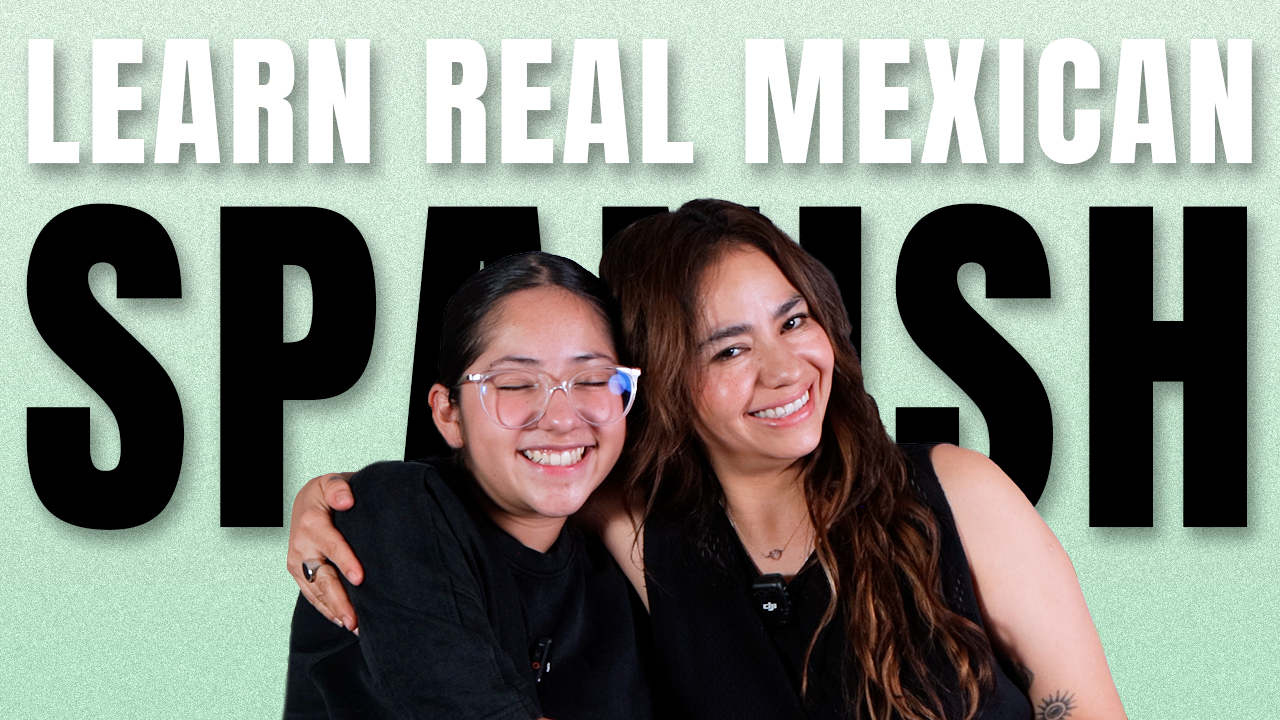
0:04El día de hoy estoy con mi tía Maguitos, que según mi esposo británico, es mi tía la más difícil de entender.
Today I'm with my aunt Maguitos, who according to my British husband, is my hardest aunt to understand.
0:13Vamos a ver si es cierto.
Let's see if that's true.
0:15Ella es mi tía Maguitos.
This is my aunt Maguitos.
0:16Hola, tía.
Hi, auntie.
0:17Hola, mi amor.
Hello, my dear. So nice to meet you.
0:18Mucho gusto.
Hello, my dear. So nice to meet you.
0:19Soy Blanca Margarita.
I'm Blanca Margarita.
0:21A sus órdenes.
At your service.
0:22Este, pues estoy aquí con Eriquita, platicando y todo.
So, well, I'm here with Eriquita, chatting and all that.
0:27Pues les quiero contar un poco de mi historia, de mi vida.
And I want to tell you a little about my story, my life.
0:32La verdad, pues tuve una infancia muy, muy bonita, Mis padres fueron unos padres a todo dar.
The truth is, I had a very, very nice childhood, My parents were the best.
0:39Eh, tengo nueve, tuve nueve hermanos, ya dos fallecieron, Mis papás también ya fallecieron Entonces, pues tengo
Uh, I have nine, I had nine siblings, two have already passed, My parents have also passed away So, I have
0:50un montón de sobrinos, sobrinas.
a ton of nephews and nieces.
0:54Este, mi vida ha sido muy, muy bonita.
Err, my life has been really great.
0:58Me gusta mucho viajar a mi linda República Mexicana y a algunos otros países...
I love to travel through my beautiful Mexican Republic and various other countries...
1:04que he estado en unos países de sueño, mexicanos y europeos también.
because I've been to some amazing places, in both Mexico and Europe.
1:10Este, ¿qué les puedo decir?
Err, what can I tell you?
1:13Me gusta cocinar.
I love cooking.
1:16Soy muy alegre.
I'm very cheerful.
1:17Me gusta bailar, cantar.
I love dancing and singing
1:20Me gusta mucho la música, este, pues moderna, ¿no?
I love music, err, modern music, you know?
1:26De esta, de Ibiza, que está de súper moda.
Like trendy Ibiza-style music.
1:30Ya también fui a Ibiza, que es un lugar de sueño.
I've actually also been to Ibiza, and it's an amazing place.
1:34Y pues, puro cotorreo, ¿no?
And well, I spent my time partying and having fun, didn't I?
1:37Imagínense, yo estar en esos lugares tan hermosos como Formentera, San Eulalia, lo que es Roma, Pisa, Siena, Milán.
Imagine, me being in places as beautiful as Formentera, San Eulalia, places like Rome, Pisa, Siena, Milan.
1:49Me encanta viajar.
I love traveling.
1:50Me pongo a ahorrar, ahorrar, ahorrar y me voy de viaje.
I start saving, saving, saving and off I go on a trip.
1:53Y mi papá me decía, Blanca, agarra los coches para que aprendas a manejar.
And my dad used to tell me, Blanca, get behind the wheel so you can learn to drive.
1:57Aprendí a manejar y todo, pero no juntaba y mejor preferí irme a España, que tenía unas tías que que vivían en Madrid y unas en Barcelona y en Palma.
I learned to drive and everything, but I couldn't save up (for a car) so I went to Spain instead, where I had some aunts who lived in Madrid and some in Barcelona and in Palma.
2:08Lo que más me gusta hacer es viajar.
What I love doing most is traveling.
2:11¿Más que cocinar?
More than cooking?
2:13Sí.
Yes.
2:16Sí, me encanta viajar, porque aprendes y estar en lugares tan padrísimos.
Yeah, I love traveling, because you learn so much and you get to visit such amazing places.
2:22También mi República Mexicana, que es hermosa, pero, o sea, a mí me gusta mucho brincar el charco.
I’ve also traveled all over Mexico, and it’s beautiful, but honestly I really love going abroad.
2:28Y cuéntanos, tía, ¿cuál es tu recuerdo más viejo así de la infancia?
And tell us, auntie, what’s your oldest memory from childhood?
2:39No sé, como que sea muy entrañable tuyo.
I don't know, like something really dear to you.
2:42Pues con mis hermanos, ¿no?
Well, with my siblings, right?
2:45Que siempre anduvimos siempre juntos.
We were always together.
2:48Tenemos en paz descanse nuestra hermana Yola, que ya falleció hace poco, Era un bebé, entonces vivíamos en la colonia que había como rampas,
We have, rest in peace, our sister Yola, who passed away recently, She was a baby, and we lived in a neighborhood that had these little slopes,
3:01entonces ella tenía una periquera que se hacía cochecito.
and she had a high chair that converted into a little cart.
3:06Entonces, la sentábamos y la dejábamos ir por por las rampas se iba así bien rápido y gracias nunca se cayó ni le pasó nada.
So we'd sit her in it and let her go down the slopes she'd fly down really fast and thank God she never fell or got hurt.
3:18Y bueno, sí, esas cosas definitivamente pues no se olvidan, ¿no?
And well, yeah, that type of thing you just don't forget, do you?
3:22Y luego mi hermano Carlos, que es un una persona muy inteligente, pues éramos niños.
And then my brother Carlos, who’s a very intelligent person, well, we were kids.
3:29y me decía, a este radio, era un radio así chiquito de los que había, no sé si los llegaron a conocer, unos cuadritos. le vamos a poner electricidad.
and he said to me, this radio, it was a tiny little radio the kind they used to make, I don't know if you ever saw them, little square ones. And he said to me, we're going to electrify this radio.
3:40Y yo le digo, sí, bueno.
And I said, sure, okay.
3:42"Bueno, ponte abusada."
"Alright, pay attention."
3:44Y conecta dos, este, ganchitos, los conecta hacia al, este, enchufe, conecta y entonces me explota el radiecito,
And he connects two little clips, he plugs them into the outlet, he connects them and then the radio exploded in my face
3:57a toda la cara negra me quedó, pues antes no me pasó otra cosa.
my whole face went black, well, luckily nothing worse happened to me.
4:02Son anécdotas.
Those are just a few anecdotes.
4:04Y mi hermano hacía sus carros de baleros, de llantas de baleros y pues nos echábamos por esas rampas también.
And my brother made his little cars out of ball bearings, wheels out of ball bearings and we'd go flying down those slopes too.
4:13Pues somos, fuimos nueve hermanos, entonces pues éramos bien traviesos.
Well, we were nine siblings, so we were pretty mischievous.
4:18Tuve experiencias muy padres con mis papás porque siempre pues nos llevaba de día de campo, nos llevaba a pasear, a nadar.
I had wonderful experiences with my parents because they always took us to the countryside, they took us on trips... we used to go swimming.
4:28Siempre mi papá fue una persona muy querida, mis padres trabajaban mucho, éramos nueve y siempre estuvimos nana y la señora que trabajaba, la nana que nos cuidaba y mis hermanos eran muy traviesos
My dad was a very beloved man, my parents worked a lot, there were nine of us and we were always with our nanny and the lady who worked for us, the nanny who looked after us and my siblings were very mischievous
4:42con mi nana, le hacían travesuras.
with my nanny, they'd play tricks on her.
4:44Ay, ¿qué le hacían?
Oh, what did they do to her?
4:45Pobre nana.
Poor nanny.
4:46Ay, pos.
Oh, well.
4:47Luego, este... haz de cuenta que a tu papá le decía: “Oye, niño, ven a comer."
So, like, basically she used to say to your dad: "Hey kid, come eat."
4:54No tengo hambre, Paulita.
I'm not hungry, Paulita.
4:55Bueno, pues al rato a ver quién te da de comer.
Fine, well later let's see who feeds you.
4:59Y ya, este, pues era tarde y llegaba a la mesa mi hermano y decía, Paulita, dame de comer y se pone así.
And then, well, it would get late and my brother would come to the table and he'd say, Paulita, feed me and he'd do this.
5:06Y la Paulita le decía, no, no te voy a dar, niño.
And Paulita would say, no, I'm not going to feed you, kid.
5:10Ah, te voy a acusar con mi mamá y mi papá si no me das de comer.
Ok, well, I'm going to tell on you to my mom and my dad if you don't feed me.
5:13Está bien, niño, sí te voy a dar de comer.
Okay, kid,
5:15Cosas así.
fine, I'll feed you. Things like that.
5:18¡Qué bárbaro!
Unbelievable!
5:19Y pues mis hermanas, las mayores también.
And well, my sisters, the older ones too.
5:23Mi papá era muy estricto con nosotros, pero un papá bien amoroso, no nos pegaba o nada, nos consentía, pues lo que nos podían dar y todo mis padres, ¿no?
My dad was very strict with us, but he was also very loving, he never hit us or anything, he spoiled us, my parents gave us what they could and everything didn't they?
5:34Siempre trabajaron mucho para nosotros y pues le doy gracias a Dios de haber tenido una familia tan hermosa y unos padres muy padres.
They always worked hard for us and I thank God for having had such a beautiful family and such wonderful parents.
5:45Mira, este, ahorita por ejemplo, pues fuimos nueve, más mis cuñadas.
Look, so, right now for example, well, there were nine of us, plus my sisters-in-law.
5:52Luego de mis cuñadas, este, pues los esposos de mis hermanas.
Then we have my sisters-in-law err, and my sisters' husbands.
5:57Somos cinco mujeres y cuatro hombres.
There are five women and four men.
6:00Más aparte tengo ahorita cuarenta sobrinos, los hijos de mis hermanos.
On top of that I now have forty nephews and nieces, my siblings' children.
6:06Y ya los bisnietos ya rebasaron a los nietos, son más de cuarenta, como cuarenta y dos.
And the great-grandchildren have already outnumbered the grandchildren, there are more than forty, about forty-two.
6:15Y luego tengo dos, este, sobrinos tataranietos de mis papás.
And then I also have two, err, great-great-grandnieces and nephews of my parents.
6:20Entonces ya es una familia de dos gentes, pues es un buen de gente, ¿no?
So it's already a huge family... I mean, it's a lot of people, isn't it?
6:26Son muchísimos.
There are so many of us.
6:27Somos muchísimos, ahora sí que, híjole, nuestro familión.
There are loads of us, so yeah, damn, our family is massive.
6:32Somos la familia Camacho.
We’re the Camacho family.
6:34Sí, sí somos.
Yes, yes we are.
6:35La familia Camacho Arciniega, pero sí somos muchísimos.
The Camacho Arciniega family, but yeah, there are so many of us.
6:40Es impresionante.
It's incredible.
6:41Sí, por eso yo creo que somos tan fiesteros, tan bailadores, tan de juntarnos, ¿no?
Yeah, I think that's why we love to party and dance so much, and love getting together, don’t you think?
6:48Porque hay otras familias que son un poquito más dispersas y aquí en México, tengo que hacer hincapié porque mi tía tocó un punto muy importante.
Because there are other families that are a little more disperse... and here in Mexico, I have to emphasize because my aunt touched on a very important point.
6:57o sea, a nosotros no nos pegaban porque aquí en México hay mucho machismo.
Like, we were never hit because here in Mexico there is a lot of machismo.
7:02Se está erradicando poco a poco, ¿verdad?
It's slowly being eradicated very gradually, right?
7:06Pero todavía hay muchas familias en las que es normal o lo ven normal, o sea, no sé por qué, porque no lo es, que peguen, ¿no?
But there are still many families in which it's considered normal, like, I don't know why, because it's not okay, hitting others, is it?
7:16Sí, claro.
Yes, of course.
7:17Pero pues en nuestra familia no.
But not in our family.
7:18O sea, ahí sí, todos somos muy peace and love.
Like, in that sense, we're all very peace and love.
7:22Sí, sí, y yo creo es lo mejor ser felices.
Yeah, exactly; I think it's best just to be happy.
7:26Bueno, mi lema es ser feliz, ¿no?
I mean, my motto is to be happy, isn’t it?
7:29Y pues hago todo lo que puedo para hacer que no me afecten las cosas.
And I do everything I can to make sure things don't get to me.
7:35Luego me dicen que no soy enojona.
People tell me I don't get angry.
7:37Sí, sí soy enojona, claro que sí, como todo mundo, pero prefiero no ser enojona.
But I do get angry, obviously, like everyone, but I try not to be an angry person.
7:43Claro, mejor ser buena onda que ser enojón.
Of course, it’s better to be easygoing than to be angry all the time.
7:46A mí también a veces se me sale el carácter, pero creo que también uno tiene que aprender a poner límites y es muy importante, ¿no?
I also sometimes lose my temper, but I think one has to learn to set limits ...it's very important, isn't it?
7:55O sea, tampoco puede ser todo el tiempo súper buena onda y sobre todo con gente que no lo es.
I mean, you can't really be super nice and easygoing all the time, especially with people who aren't very nice themselves.
8:00Entonces nosotros somos muy lindos con todo el mundo, pero aguas si te pasas de la raya porque entonces ahí nos sale, nos sale el carácter.
So we're nice to everyone, but be careful if you cross the line because then that's when our tempers flare up.
8:09Sí, claro, te sale el fua.
Yes, of course, that's when we really let loose.
8:16Y por ejemplo, o sea, eh, le entiendes muy bien a Rupert, o sea, porque Rupert ya lleva un rato estudiando español y mi tía habla mucho con Rupert,
And for example, I mean, uh, Do you understand Rupert well? Because Rupert's been studying Spanish for a long time now and my aunt talks to him a lot,
8:28o sea, siempre nos invita a comer, siempre viene a la casa, ¿verdad?
she always invites us over for food, and often comes over here, right?
8:32Sí, claro, no, sí, yo me llevo a todo dar con Rupert Es una linda persona y siempre me pongo a platicar...
Yes, of course, I get along great with Rupert He's a lovely person and I always end up chatting...
8:39Cuando yo lo conocí por primera vez, llegó a la casa de ustedes, que es mi casa, pero digo, es un dicho aquí en México que decimos mi casa es tu casa, o sea es es eso, ¿no?
When I met him for the first time, he came over to your house, which is my house, but it's a saying here in Mexico that we say my home is your home, that's what it means, right?
8:51Porque hay veces que piensan que mi casa es la casa de ellos.
Because sometimes people think my house is their house.
8:56No, mi casa es casa para todos, ¿no?
No, my house is a home for everyone, isn’t it?
8:58O sea que son bienvenidos todos.
In other words: everyone's welcome.
9:01Entonces llegó Rupert y me dice, Se me queda viendo.
So yeah, Rupert arrived and he says... he actually just stared at me.
9:04Y le digo: "Soy tu tía Maguitos."
And I said: "I'm your aunt Maguitos."
9:05Y me dice, ah, mi tía Maguitos.
And he said, ah, my aunt Maguitos.
9:07Y me llevo muy bien con él y lo quiero mucho.
And I get along really well with him and I love him dearly.
9:09ya son muchos años que lo conozco.
I've known him for many years now.
9:12Es una excelente persona.
He's an excellent person.
9:14¿Y crees que habla bien español o qué tal?
And do you think he speaks good Spanish or what?
9:17No, sí, habla muy bien el español.
Yes, he speaks very good Spanish.
9:19Sí, y hasta el slang y todo.
Yep, even the slang and things like that.
9:21Es muy importante porque en México, a veces, en otros países, a lo mejor son un poco más correctos al hablar, ¿no?
It's very important because in Mexico, sometimes, in other countries, maybe they're a little more formal in the way that they speak, right?
9:30Pero aquí en México tenemos muchísimos modismos, como por ejemplo eso de mi casa es tu casa, ¿no?
But here in Mexico we have so many slang expressions, like for example that thing about my home is your home, right?
9:37Híjole, dichos que te conozcas, ¿qué les puedes decir?
Goodness, sayings you know, can you think of any?
9:43Un dicho, tenemos muchos.
A saying... we have so many.
9:47Ay, sí, un buen.
Yeah, we've got loads.
9:49La cabra tira al monte, zapatero a sus zapatos, ¿Qué más?
A leopard can't change its spots, stick to what you know, What else?
10:00Más vale tarde que nunca, chiquito pero peligroso.
Better late than never, small but mighty.
10:08Chiquito pero picoso, como nosotras.
Small but spicy, like us.
10:11Este... sí, tenemos muchos, ¿no?
Err, so yeah, we have loads, don't we?
10:14O sea, como que México es mucho de dichos, de frases, de inventar palabras, ¿no?
Like, Mexico is all about sayings, and phrases, and inventing words, isn’t it?
10:21Sí, claro.
Yeah, definitely.
10:22Mi tía, por ejemplo, siempre que me saluda me dice mi amor, ¿no?
My aunt, for example, always greets me with mi amor, don’t you?
10:27Hazles mi amor, tía.
Say it to them, auntie.
10:29Hola, mis amores.
Hello, mis amores.
10:32Es que conmigo suena más bonito porque me dice "mi amor."
It sounds cuter when she says it to me because she says "mi amor."
10:35Ah, es que ella es muy cariñosa conmigo.
Ah, that's because she's very cute with me.
10:37Y por eso digo: "Hola, mi amor, ¿cómo estás?"
And that's why I say: "Hello, my dear, how are you?"
10:40Y me encanta, me encanta que me diga porque es que ella tiene una forma de ser como con mucha chispa, con mucho ángel.
And I love it, I love it when she says it because she has so much zest for life, and so much charm.
10:49Es de esas personas que siempre es alegre, que siempre está festejando, que siempre se acuerda de hasta del sobrino más nuevo cuando cumple años y siempre el detallito y siempre,
She's one of those people who’s always cheerful, who’s always celebrating, who always remembers even the newest nephew’s birthday and she always arrives with a little gift,
11:01o sea, por ejemplo, hoy vino a la casa este...
like, for example, today she came to the house um...
11:05a su casa y entonces trajo galletas y le digo, ay no, tía, ¿cómo crees?
to her house and and she brought cookies and I said, oh no, auntie, you didn't have to!
11:10Y entonces se pone a hornear sus galletas, deliciosísimas.
And then she starts baking her cookies, which are absolutely delicious.
11:15O sea, si mi tía pudiera importar sus galletas, híjole, ya sería millonaria.
I mean, if my aunt could export her cookies, goodness, she'd be a millionaire by now.
11:21Sí, sí, me quedan muy ricas.
Yeah, they’re honestly really delicious.
11:24Luego les vamos a mandar unas fotos donde estoy ahí de chef.
Later we'll send you some photos of me cooking.
11:27Exacto, sí, porque tiene su cocina grande y siempre, o sea, siempre la ves metida en la cocina, pero de verdad es que cuando pruebas la comida dices, híjole, esto es Dios.
Exactly, yeah, because she has a big kitchen and you literally always see her doing something in her kitchen, but honestly when you taste her food you say, wow, this is divine.
11:41Quiero más.
I want more.
11:42Quiero más, sí, todo el mundo repite, o sea, persona que la conoce, persona que repite comida, ¿no?
I want more, yeah, everyone goes back for seconds, literally everyone who meets her, goes back for more, right?
11:49Sí, sí, sí.
Totally.
11:50¿Para cuánto es el máximo número de personas?
What's the biggest group you've ever cooked for?
11:55O sea, ¿cuántos comensales ha sido tu máximo?
I mean, what's the biggest group of diners you've cooked for?
11:59Doscientas personas.
Two hundred people. Two hundred people, yeah.
12:03Híjole, yo cocino como para cinco personas y ya es mi top.
Wow, I cook for about five people and that's already my max.
12:07Sí, sí, sí.
Yeah, totally.
12:08En cantidades...
In terms of number of people...
12:10Pues sí.
Well, yeah.
12:11Estudié, este, hice cursos de comida europea, mexicana.
I studied, err, I've taken cooking courses, on both European and Mexican food.
12:20Entonces, pues, repostería.
And pastry courses too.
12:23Tenía un cafecito, entonces luego iban los chefs, pues me enseñaban a hacer los pasteles, las galletas, todo, y pues me dicen, tienes que aprender más y tú tienes que inventar tus recetas y es lo que hago,
I had a little café, and the chefs would come, and they'd teach me to make cakes, cookies, and things like that, and they'd tell me that you always need to keep learning and that you have to make your own recipes and that's what I do,
12:37y mucha gente me ha dicho, haz un libro con tus recetas, tan rico que guisas, pero bueno, prefiero que se deleiten con mis guisos.
and many people have told me, write your own recipe book, you cook so well, but well, I just want people to enjoy my dishes.
12:47Pero sí sería muy bueno, fíjate, o sea, tener el libro de la tía Maguito, o sea, se me hace súper padre porque a veces hay recetas que se pierden, de hecho, mi tía me enseñó a hacer en… nosotros,
But it's actually a great idea, you know, I mean, having the cookbook of aunt Maguito, I think it would be really amazing because sometimes recipes get forgotten, in fact, my aunt taught me to make... in our home,
12:59como tradición en nuestra casa, tenemos el bacalao a la vizcaína, que se prepara, y mi abuelita, que en paz descanse, pues ya era la que lo cocinaba,
as a tradition in our house, we eat bacalao a la vizcaína (at Christmas), which we make ourselves, and my grandmother, rest in peace, well she was the one who used to cook it,
13:11pero después fue mi tía Maguito, y la verdad es que es una delicia.
but now my aunt Maguito prepares it, and honestly it's AMAZING.
13:17Los chiles en nogada.
The chiles en nogada.
13:19También, y ella me ha enseñado justo esos dos platillos, me enseñó, me ha enseñado varias recetas mexicanas buenísimas como la cochinita pibil, ella me pasó la receta y cada vez que alguien prueba mi cochinita,
Yeah, they're delicious too... and she's taught me exactly those two dishes, she's taught me several delicious Mexican recipes like cochinita pibil, she gave me the recipe and every time someone tries my cochinita,
13:32todo el mundo dice, wow, está deliciosa, y eso que no han probado la de mi tía, porque a mí no me queda igual, y luego el bacalao también me lo enseñó… deliciosisísimo,
they say, wow, it's delicious, and they haven't even tried my aunt's, because mine isn't anywhere near as good, and then the bacalao... she also taught me how to make it and it's absolutely divine,
13:45o sea, y la verdad, o sea, a mí tampoco me queda como a ella, este, los chiles en nogada también me los enseñó mi tía, y no saben, o sea, sí creo que un día, me acuerdo que tenía mucho antojo,
and honestly, again it's no way near as good as hers, err, the chiles en nogada my aunt also taught me how to make them, and you have no idea, I think one day, I remember that I was really craving them,
13:59estaba embarazada, y dije, ay, voy a preparar mis chilitos en nogada, como me dijo mi tía, y yo tenía ahí como mi recetita y todo guardada, y cuando los probé, dije, ay, sí me supieron como los de mi tía Maguito.
I was pregnant, and I said, oh, I'm going to make some chiles en nogada, just like my aunt taught me, and I had a recipe that I'd stored somewhere, and when I tried them, I said, oh yeah, they actually do taste just like aunt Maguito's.
14:10Ya ven, todo con amor.
See, everything's made with love.
14:12Si creo que a veces es muy importante, uno piensa, ay no, pues a lo mejor algo, esto no es tan bueno, o algo así, pero si tuvieras un recetario, híjole, sería un regalo para la humanidad.
Yeah, I think sometimes it's very important, you think, oh well maybe this isn't actually that good, and things like that, but if you had a recipe book, wow, it would honestly be a gift to humanity.
14:26Y tía, cuéntanos, este, ¿a qué edad empezaste a cocinar?
And auntie, tell us, at what age did you start cooking?
14:32A los seis años.
When I was six.
14:33¿Seis años?
Six years old?
14:36Bueno, ya me gustaba cocinar, yo tenía seis años, y mi primera sopa que hice, fue a mis papás.
Well, I already liked to cook, I was six years old, and the first soup I made was for my parents.
14:42Llegaron del trabajo, y le dije a mi nana, Paulita, se llama Paula, se llamaba Paula, mi nana, y le dije, Paulita, ponme una silla ahí cerca de la estufa,
They came home from work, and I said to my nanny, Paulita, her name is Paula, her name was Paula, my nanny, and I said, Paulita, can you put a chair by the stove,
14:54porque voy a guisar.
because I'm going to cook.
14:56Entonces hice yo una sopa de fideo, y entonces, este, salsa, y otro guisito por ahí, que no recuerdo,
So I made a noodle soup, and then a sauce, and another little dish, that I don't remember,
15:08y mis papás como llegaban de trabajar, que eran comerciantes, entonces llegaban ya con comida, pollo, el segundo plato y así y la nana ya tenía todo preparado,
and when my parents came home from work, they were merchants, so they'd arrive with food, chicken, the second course, and so on and my nanny already had everything ready,
15:20y le dije papá, mamá no se preocupen, yo ya guisé, ya hice la comida, y mi papá dijo, deme la comida que hizo mi hija, y era una sopa medio quemadita, y mi papá me decía que me había quedado muy rica,
and I said, dad, mom, don't worry, I've already cooked, I've already made the food, and my dad said, give me the food my daughter made, and it was a slightly burnt soup, but my dad told me that it was delicious,
15:33entonces de los seis años me gusta guisar.
so ever since the age of six I've loved to cook.
15:36Oye, ¿y a los seis años te dejaban cocinar?
Hey, and at six years old they let you cook?
15:39O sea, porque ahora eso...
I mean, because nowadays...
15:41No, sí, pues me cuidaba mi nana, mi nana me cuidaba de que estaba al pendiente ahí, no me dejaba sola, pero yo cociné.
Yeah, I mean, my nanny was watching me, my nanny was keeping an eye on me, keeping watch, she didn't leave me alone, but I cooked.
15:50¿Y quién te enseñó?
And who taught you?
15:50Y estaba chiquita yo, chiquita, pues no sé, pero yo creo eso ya lo traigo de siempre.
And I was so little, tiny, well, I don't know, but I think I just always had it in me.
15:57Definitivamente sí, es un don, porque...
Definitely yeah, it's a gift, because...
15:59Sí, pero hasta que quede perfecta la comida...
Yeah, but until the food is perfect...
16:03soy muy exigente.
I'm very demanding.
16:05Sí, y también es muy exigente con sus ingredientes, ¿verdad?
Yes, and she's also very particular about her ingredients, right?
16:08Sí, exactamente.
Yes, exactly.
16:10Porque creo que para una buena cocina también tiene mucho que ver cómo escoges las cosas, ¿no?
Because I think good cooking has a lot to do with how you choose your ingredients, right?
16:17Pues a lo lírico, o sea, ahí a veces se tienen que pesar las cosas, pero yo ya nomás, agarro esto y esto y esto, las especies, todo, y ya tengo como la medida.
Well, I use my instinct, I mean, sometimes you have to weigh things out, but I normally just grab this and this and this, the spices, everything, and I generally know how much to use.
16:30Sí, pues ya la sensibilidad, ¿no?
Yeah, well, it's instinct, isn't it?
16:33Sí, sí, sí.
Exactly.
16:34Ya es un talento, es una chef nata, mi tía preciosa, Maguito.
It's a talent, she's a born chef, my wonderful aunt, Maguito.
16:39Desde los seis años.
Ever since I was six.
16:42Me ha costado.
It's been a journey.
16:43O sea que siempre ha sido muy independiente, tía.
So, you've always been very independent, auntie?
16:46¿Y a los cuántos años fue la primera vez que saliste de México?
And how old were you the first time you left Mexico?
16:54Ay, ¿cuántos años tenía?
Oh, how old was I?
16:57A los 28.
I was 28.
16:59¿Y a dónde te fuiste?
28. And where did you go?
17:01Ah, oh, pues es que he conocido muchos lugares de sueño, ¿no?
Oh, well, I've been to so many amazing places, haven't I?
17:08Y, por ejemplo, cuando estás fuera, ¿qué es lo que extrañas de México?
And, for example, when you're abroad, what do you miss about Mexico?
17:14Ay, pues extraño a mis taquitos de al pastor.
Oh, well, I miss my tacos al pastor. Al pastor are your favorites?
17:21Sí.
Yes.
17:22¿Y sabes cocinar el pastor?
And do you know how to cook al pastor?
17:24Sí.
Yeah, I do.
17:25Ah, muy bien.
Ah, nice.
17:26Pues luego también pásanos la receta, tía.
Well, later you can give us the recipe, auntie.
17:28Sí, claro, les doy la receta.
Yes, of course, I'll give you the recipe.
17:30Pues, como ya vieron, mi tía es una persona muy, este, moderna también.
Well, as you've seen, my aunt is a very, modern person too.
17:36Yo me acuerdo mucho que cuando era chiquita, este, siempre estaba escuchando música,
I remember that when I was little, err, she was always listening to music, literally always listening to music.
17:44Y tenía un cuarto que era pequeñito, ¿no?
And she had a small room, didn't you?
17:48Y había como, era como una consola o algo así que tenías.
And you had like a console, or something like that.
17:52Sí, pero antes eran los estéreos.
Yeah, but back then they were stereos.
17:54Ajá.
Uh-huh.
17:55Y nos dormíamos a veces con mi tía Maguito y ella se dormía con música.
And we'd sometimes sleep with my aunt Maguito and she'd fall asleep listening to music.
18:01Y yo decía, ay, qué padre, yo quiero ser como mi tía Maguito cuando sea grande.
And I used to think, oh, how cool, I want to be like my aunt Maguito when I grow up.
18:04O sea, porque siempre estaba escuchando música, siempre estaba alegre.
Because she was always listening to music, she was always cheerful.
18:09Este, escuchabas mucho, me acuerdo en esa época, pues ahora sí que no se escuchaba tanto en México, a lo mejor la música en inglés y así.
Err, you used to listen a lot, I remember back then, well, it wasn't really that common in Mexico, to listen to English music and things like that.
18:18Pero ella ya escuchaba The Cranberries, Garbage, ¿no?
But she was already listening to The Cranberries, Garbage, weren't you?
18:21O sea, como este tipo de grupos.
Like those kinds of bands.
18:24Porque siempre ha sido de que, no sé, si algo está de moda, ella lo está escuchando.
Because she's always been someone who, I dunno, if something's trendy, she'll be listening to it.
18:29Yo voy a la moda.
I try to keep up with trends.
18:31Sí, o sea, no.
Yes, I mean, no.
18:32De la música.
At least where music's concerned.
18:33Y hay personas que como que se van envejeciendo, o sea, no sé, cumplen un año más y de repente se van quedando así como con antiguas tradiciones.
And there are people who like get older, I mean, they get a year older and suddenly they kind of get stuck in their old-fashioned ways.
18:41Pero mi tía sí es muy tradicional para ciertas cosas.
But my aunt is very traditional in some ways.
18:44Me gusta Lady Gaga, todo ese tipo de música, ¿no?
I like Lady Gaga, all that kind of music, right?
18:49Y de las de antes también.
And the old stuff too.
18:51Sí, o sea, tú la puedes escuchar escuchando de todo y bailando de todo.
Yep, I mean, you can hear her listening to everything and dancing to everything.
18:55Y a todo, para todo se sabe mover, ¿a poco no, tía?
And she can move to anything, isn't that right, auntie?
18:58Sí, hasta cuando guiso para que me quede más sabrosa la comida.
Yep, even when I cook... it makes my food tastier.
19:02Mira... hay un libro que me recuerda mucho a mi tía cuando lo leí y se llama Como Agua para Chocolate, de Laura Esquivel.
There's actually a book that reminds me a lot of my aunt when I read it and it's called Like Water for Chocolate, by Laura Esquivel.
19:11Y habla mucho acerca de que la cocina es de emociones, ¿no?
And it talks a lot about how cooking is all about emotions, doesn't it?
19:16Con amor.
With love.
19:17Sí.
Yes.
19:18Y mi tía siempre que la ves cocinando, de verdad que siempre anda de buenas. su música y la ves aquí y de repente baila, y le echa la movidita.
And whenever you see my aunt cooking, honestly she's always in a good mood. She's always in a good mood, with her music blaring and suddenly she dances and gives the soup
19:28a la sopa, ¿no?
a little stir, don't you?
19:29Y todo hacia esta...
And Tita cooked everything
19:31La Tita con mucho amor.
with lots of love.
19:33Y entonces una vez yo tenía un galán, entonces una vez salé toda la comida, y mi papá me dice, le preguntaba a mi papá, ¿cómo me quedó la comida?
And so once I had a boyfriend, and this one time I added too much salt to the food., literally everything and my dad said, I used to ask my dad how the food was
19:45Ah, muy rica, hija.
Oh, delicious, dear.
19:47Y un día salé toda la comida, toda, toda.
And one day I added too much salt to the food., everything was too salty.
19:50Pero yo callada, callada y me dice, Blanca, es que me llamo Blanca Margarita.
But I didn't say anything and he said, Blanca, because my name is Blanca Margarita.
19:55Mande, papá.
Yes, dad?
19:56Dice, ahora, ¿qué te pasó?
And he said, so, what happened?
19:58¿De qué, papá?
What do you mean, dad?
19:59Es que la comida no estuvo buena.
The food wasn't good.
20:02Estuvo del carajo, salaste todo, mijillo.
It was crap, you used too much salt, sweetheart.
20:05Ay, perdón, es que lo hice con mucho amor.
Oh, sorry, it's just that I made it with a lot of love.
20:08Y sabes, todo salé.
And you know, I literally put too much salt on everything.
20:11¿Y por qué?
And why?
20:11¿Te acuerdas?
Do you remember?
20:12¿Algo pasó?
Did something happen?
20:12Pues porque andaba de enamorada.
Well because I was in love.
20:16Ya ven, todo se hace con amor aquí.
See, we do everything with love here.
20:19Exactamente.
Exactly.
20:20Y bueno, pues esta es mi preciosa tía Maguita, Maguita, eh, Maguito.
And well, this is my precious auntie Maguita, Maguita, Maguito.
20:26Se las quería presentar porque de verdad la quiero mucho.
I wanted to introduce her to you because I love her dearly.
20:28Igualmente.
Likewise.
20:29Espero que le hayan entendido.
I really hope you understood her.
20:30Y si no, pues de todas formas acá les vamos a dejar la traducción de todo lo que estamos hablando para que lo entiendan bien.
And if not, well either way we'll leave the translation of everything we've talked about down below so you can understand it.
20:39Sí, claro.
Yep, for sure.
20:39Y también es su tía Maguita, se las comparto.
And she's also your auntie Maguita, I want to share her with you.
20:41Claro que sí.
Of course.
20:43Muchas gracias, nos vemos.
Thank you so much, see you soon.
20:44Besitos.
Kisses.